Physical Address
304 North Cardinal St.
Dorchester Center, MA 02124
Physical Address
304 North Cardinal St.
Dorchester Center, MA 02124


By Barth Ikiebe

President Bola Tinubu has urged Nigerian editors to exercise their influence with “wisdom, fairness, and a strong sense of national duty,” stressing that responsible journalism remains central to sustaining democracy and national cohesion.
Declaring open the 21st All Nigeria Editors Conference (ANEC) at the State House, Abuja, on Wednesday, President Tinubu said that freedom secured through struggle “is not self-sustaining” and must be constantly protected through truth, balance, and professional integrity.
“A democracy is sustained not only by elections and laws, but also by the integrity of public conversation. This is where your role becomes central and indispensable,” the President stated.
He cautioned against cynicism and divisive reportage, warning that misinformation spreads faster than truth in the digital age, thereby threatening national unity.
“The editorial function is more important than ever. Verification must be your anchor; balance must be your principle, and professional judgment your guide,” Tinubu advised.
The President acknowledged the historical sacrifices of journalists in defending democracy and human rights during Nigeria’s difficult political periods, noting that their courage continues to underpin the nation’s progress.
“Journalism in Nigeria has always been more than a profession. It has been an instrument of national awakening,” he said.
President Tinubu assured that his administration remains committed to rebuilding the economy, encouraging investment, and deepening reforms that “translate into real improvements in the daily lives of Nigerians.”
He added that national development cannot be achieved by government alone but through cooperation and trust among all sectors, including the media.
“Let us choose clarity over confusion, responsibility over recklessness, and hope over despair. The stories we tell ourselves as a nation influence the country we become,” he concluded.
The President’s message set the tone for the conference, themed, “Democratic Governance and National Cohesion: The Role of Editors,” which brought together media executives, governors, legislators, and communication experts from across the country.

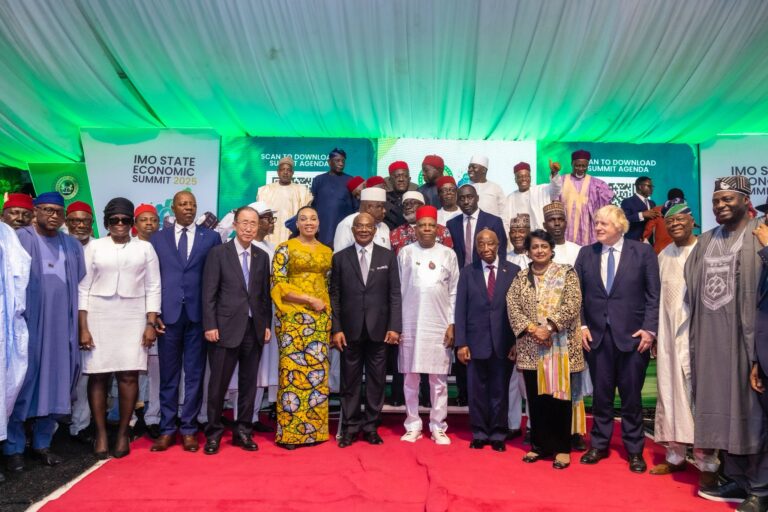
Governor of Imo State, Senator Hope Uzodimma reminded Nigerian editors that history will judge their role in sustaining democracy ahead of the 2027 general elections.
Delivering the keynote address at the 21st All Nigerian Editors Conference (ANEC) in Abuja, Uzodimma said editors are not bystanders but active participants in shaping national destiny.
“You are not spectators in 2027. You are active participants. The narratives you shape will determine whether Nigerians approach the elections with hope or cynicism,” Uzodimma said.
He described the media as the “fourth estate of the realm,” warning that their coverage could either strengthen or erode confidence in governance.
“Even in the medieval age, the press was the fourth estate. In 2027, history will critique your role in making or marring Nigeria,” he declared.
Uzodimma commended President Bola Ahmed Tinubu for declaring the conference open, noting that his presence showed a clear commitment to transparency, media engagement, and disinformation control.
“When a sitting President dedicates time to address editors, it signals that disinformation, national unity, and responsible journalism are priorities of state,” he said.
The President, Nigerian Guild of Editors (NGE), Mr. Eze Anaba, earlier in a welcome speech, called on President Bola Tinubu to introduce fiscal and policy measures to support the survival of the Nigerian media, describing journalism as “a public good that must be protected, not punished.”
Anaba said the economic and legal environment in which journalists operate had become increasingly hostile, threatening the media’s ability to perform its constitutional role as society’s watchdog.
“Without economic sustainability, our constitutional and social responsibilities become ineffectual,” Anaba warned.
He proposed a series of policy interventions, including temporary corporate tax reliefs, VAT exemptions on media inputs, tax incentives for advertisers, and the creation of a Media Development Fund to support digital innovation and newsroom transformation.
“We call for the establishment of a low-interest loan scheme through the Bank of Industry or the Development Bank of Nigeria to help media organizations upgrade equipment and create jobs,” he noted.
On the legal front, Anaba demanded the repeal of laws that inhibit press freedom and urged the creation of a Media Freedom and Safety Charter, endorsed by the Presidency, Legislature, and Judiciary.
The NGE president also called for better protection of journalists from arbitrary arrests and misuse of cybercrime laws.
“When the press thrives, democracy breathes. When it is stifled, democracy suffocates,” he emphasized.
Anaba stated that the Guild was committed to upholding ethical reporting, continuous professional training, and promoting national cohesion.
“We are partners in progress, not adversaries. A free, responsible, and vibrant press remains the lifeblood of democracy,” he assured.
Both Uzodimma and Anaba emphasised that the future of Nigeria’s democracy depends on the moral courage of editors to speak truth to power without weaponising information.
They called on editors to defend unity, promote fact-based discourse, and use the pen as an instrument of peace.

The three-day conference with over 400 Editors in attendance continues in Abuja on Thursday with panel sessions on media innovation, political accountability, and the future of journalism in the digital age.